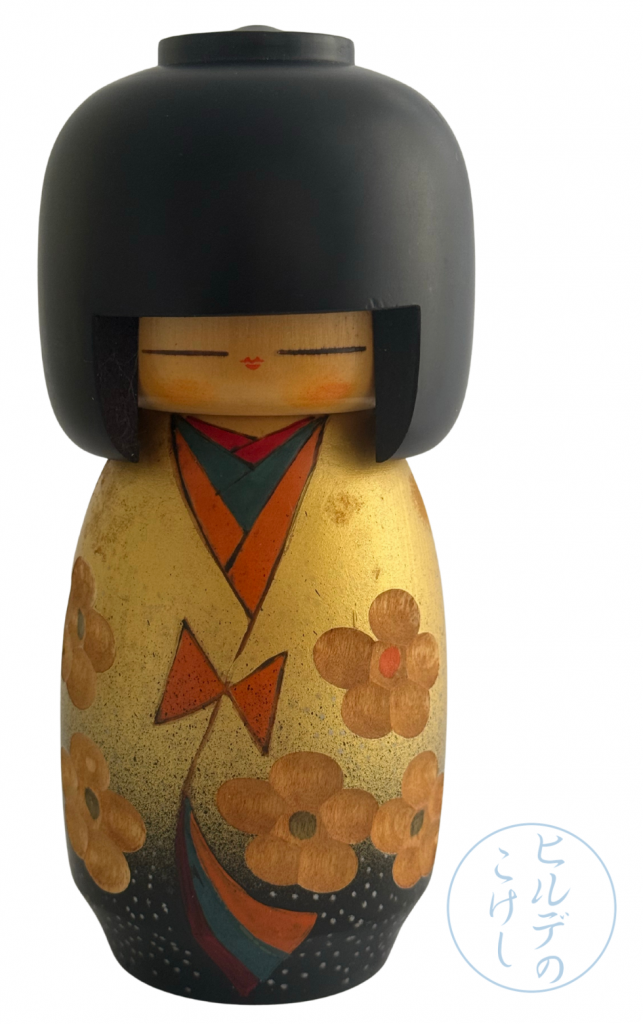
This Kokeshi is by the artisan Ishimura Sakumin (石村作) and was made for Sōgen (草玄) a well-known maker and brand of Sōsaku Kokeshi. Her name is Hana no se (花の精) which means Flower Spirit.
She has a bob hairstyle and a serene expression with blushing cheeks. Her gold coloured kimono is adorned with carved plum blossoms (梅), also known as ume . The prominent orange, ribbon-like bow painted on the front of the doll represents the obi (帯), which is the traditional sash used to fasten a Japanese kimono. The large symmetrical bow resembles the chōchō musubi (蝶々結び), the butterfly knot.
Symbolism:
- Butterflies are classic symbols of transformation, grace and femininity.
- The bright orange/vermilion of the obi contrasts against the gold background. This specific shade is traditionally used in Japan to ward off evil spirits and invite good energy and vitality.
- In Japanese culture the ume blossom is celebrated as the first flowers to bloom in late winter, and they represent hope, endurance and the arrival of spring.
- Historically, plum trees, Prunus mume, were planted in the northeast corners of properties (the “demon gate” direction) and at Shinto shrines as a protective talismans to ward of evil and misfortune and evil spirits.
- Ume is famously grouped with matsu (松) and take (bamboo) to form the traditional Sho-Chiku-Bai (松竹梅) triad, also known as the “Three Friends of Winter”. Together, they represent the ultimate symbols of good luck, longevity, and steadfastness. This combination is heavily featured in New Year decorations, wedding apparel, and high-end restaurant ranking menus.
- In waka poetry (和歌), ume was celebrated by aristocrats signifying feminine grace and dignity.
Culinary culture:
Though plums are rarely eaten raw, they can be found in the Japanese diet as follows:
- Umeboshi (梅干し): Tart and salty pickled plums that are prized for their health benefits, frequently eaten with a bed of rice or inside onigiri (rice balls).
- Umeshu (梅酒): A sweet, refreshing plum liqueur made by steeping unripe fruit and sugar in alcohol.
Specifications:
Height: 17.5 centimetres
Weight: 368 grams
Material:
Mizuki (Giant dogwood)