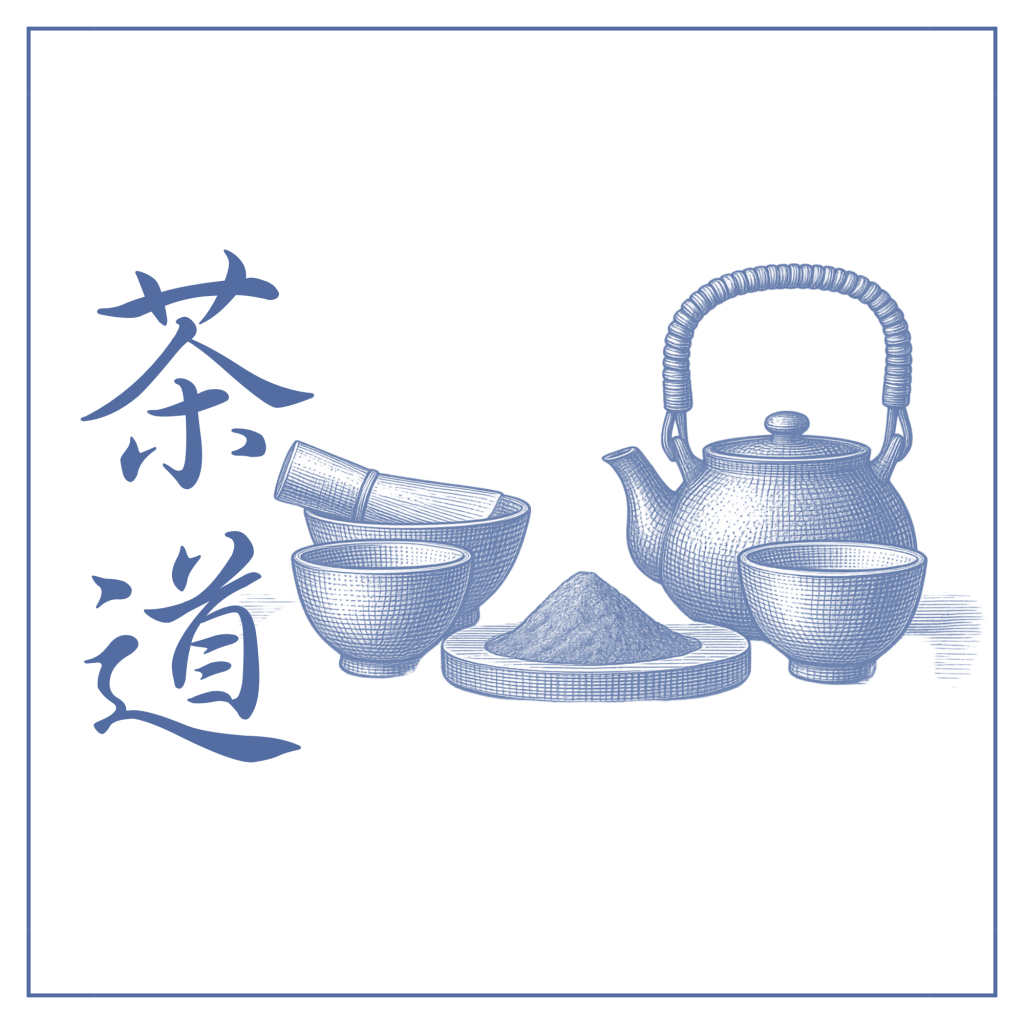
Chado (茶道), also known as Sado (茶道) or Chanoyu (茶の湯), translates to the “Way of Tea” and is the traditional Japanese tea ceremony.It is a highly structured, choreographic ritual of preparing and drinking green tea (matcha: 抹茶), serving as a spiritual practice rooted in Zen Buddhism. Far more than just serving a beverage, chado is a holistic art form designed to cultivate mindfulness, discipline, and profound respect for the present moment.
Literally translating to “hot water for tea,” Chanoyu is the oldest and most conversational term for the Japanese tea ceremony. While Chado emphasises the spiritual “way” or philosophical lifestyle of tea, Chanoyu focuses directly on the actual act, artistry, and gathering of preparing and enjoying the beverage with guests.
The Four Pillars of Chado
Formulated by the legendary tea master Sen no Rikyu (千利休), four core principles guide every aspect of the ceremony:
- Harmony (Wa / 和): Living in oneness with nature, the seasons, the guests, and the utensils used.
- Respect (Kei / 敬): Recognising the innate dignity of all things and treating others and objects with equal reverence.
- Purity (Sei / 清): The physical and spiritual cleansing of the mind, heart, and environment before entering the tea room.
- Tranquility (Jaku / 寂): A serene state of mind achieved only when harmony, respect, and purity are fully realised.
The Anatomy of a Ceremony
A formal gathering (chaji: 茶事) can last up to four hours and follows a meticulous sequence:
- The Approach: Guests walk along a damp stone garden path (roji: 露地) to shed the chaotic thoughts of the outside world.
- The Cleansing: Guests wash their hands and mouths at a stone water basin (tsukubai: 蹲踞) to practice physical and mental purification.
- The Crawl-in Entrance: Guests enter the tea room through a tiny, square door (nijiriguchi: 躙口) just three feet high. This forced bowing ensures everyone -from a samurai to a merchant – enters as equals.
- The Appreciation: Guests kneel (seiza: 星座) before the alcove (tokonoma: 床の間) to admire the seasonal scroll and the minimalist flower arrangement (chabana: 茶花).
- The Preparation: The host cleans and prepares the matcha with rhythmic, dance-like movements (temae: 点前), ensuring no energy or motion is wasted.
Essential Utensils (Dogu: 道具)
Every object used in chado is a work of art, often curated to reflect the season and the concept of wabi-sabi (侘寂):
- Chawan (茶碗): The tea bowl. Guests rotate the bowl in their hands to admire its unique, often asymmetrical shape and texture while avoiding drinking from its designated front.
- Chasen (茶筅): A whisk carved from a single piece of bamboo, used to whip the matcha into a smooth, frothy consistency.
- Chashaku (茶杓): A slender bamboo tea scoop used to measure the vibrant green tea powder.