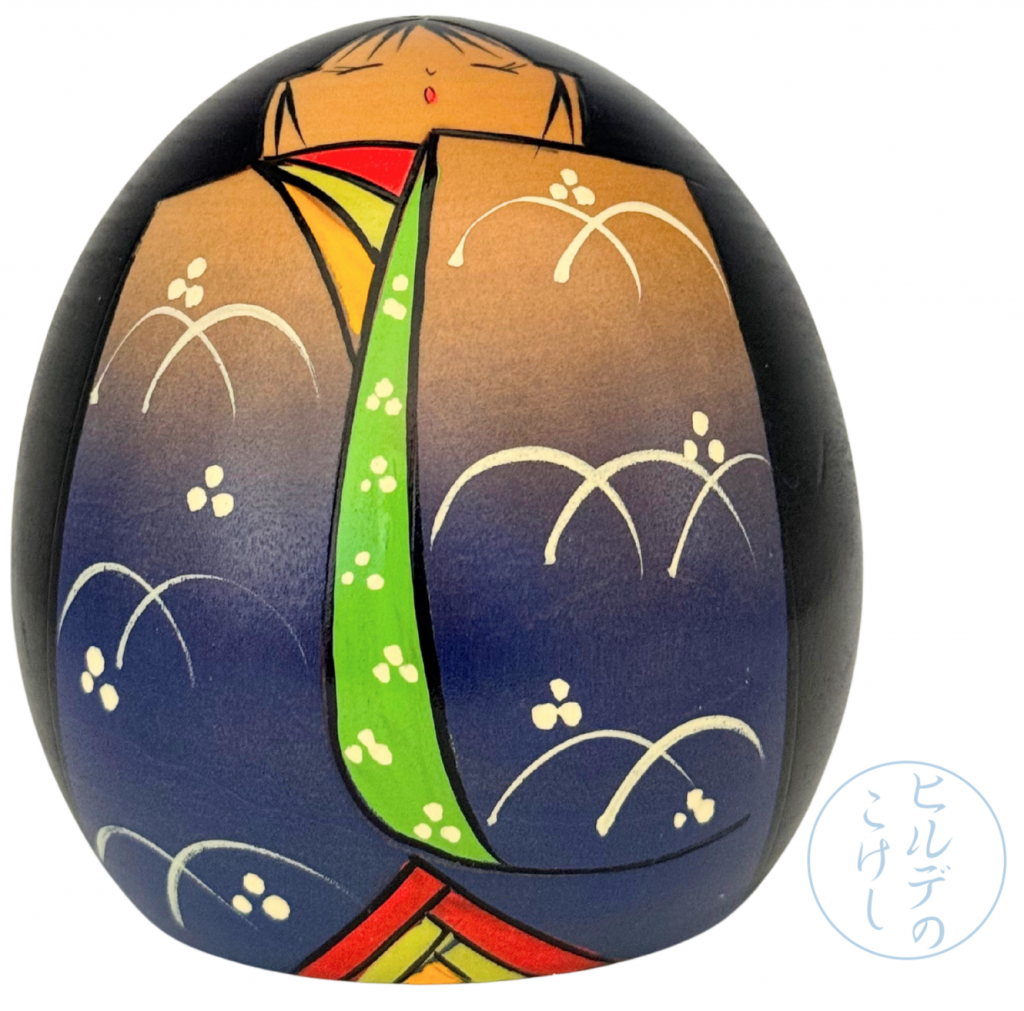
This gorgeous kokeshi by Minori Bitoku (美徳) wears a blue kimono with red, green and yellow accents. The delicate white patterns on the deep blue background represent Moonflowers blooming under a night sky.
She is called Yūgao – the kanji “夕顔” literally translates to “evening face” or “evening glory,” referring to the white moonflower (Ipomoea alba) or evening-glory, a flower that blooms at night and is often associated with transient beauty in Japanese literature, most famously in Genji Monogatari (源氏物語: The Tale of Genji), the 11th century masterpiece by Murasaki Shikibu.
In Lady Murasaki’s The Tale of Genji, the fourth chapter and the name of a tragic, mysterious lover of Prince Hikaru Genji is “Yūgao” (Evening Faces). He has a brief, passionate, and ultimately tragic affair with a mysterious noblewoman who lives in a cottage overgrown with the vine. She represents fleeting beauty, taking her name from a delicate, white flower that blooms in the twilight and withers quickly. Historically, the classical Yūgao reference belonged strictly to the white blooming blossoms of the bottle gourd plant (Lagenaria siceraria). However, since Ipomoea alba shares an identical nocturnal rhythm and large, white petals that glow in the twilight, modern Japanese gardeners and literary enthusiasts frequently conflate or associate the moonflower with the haunting, fragile grace of Genji’s lost lover.
Symbolism:
- Fleeting Love: Tied directly to its overnight blooming cycle.
- Pure Heart: Represented by the bright, luminous white of the petals.
The rounded “egg” shape is a modern variation of the classic cylindrical kokeshi, often used by award-winning artists from Gunma Prefecture, such as those from the Sekiguchi or Usaburō workshops.
Specifications:
Height: 9 centimetres
Weight: 200 grams
Material:
Mizuki (Giant dogwood)