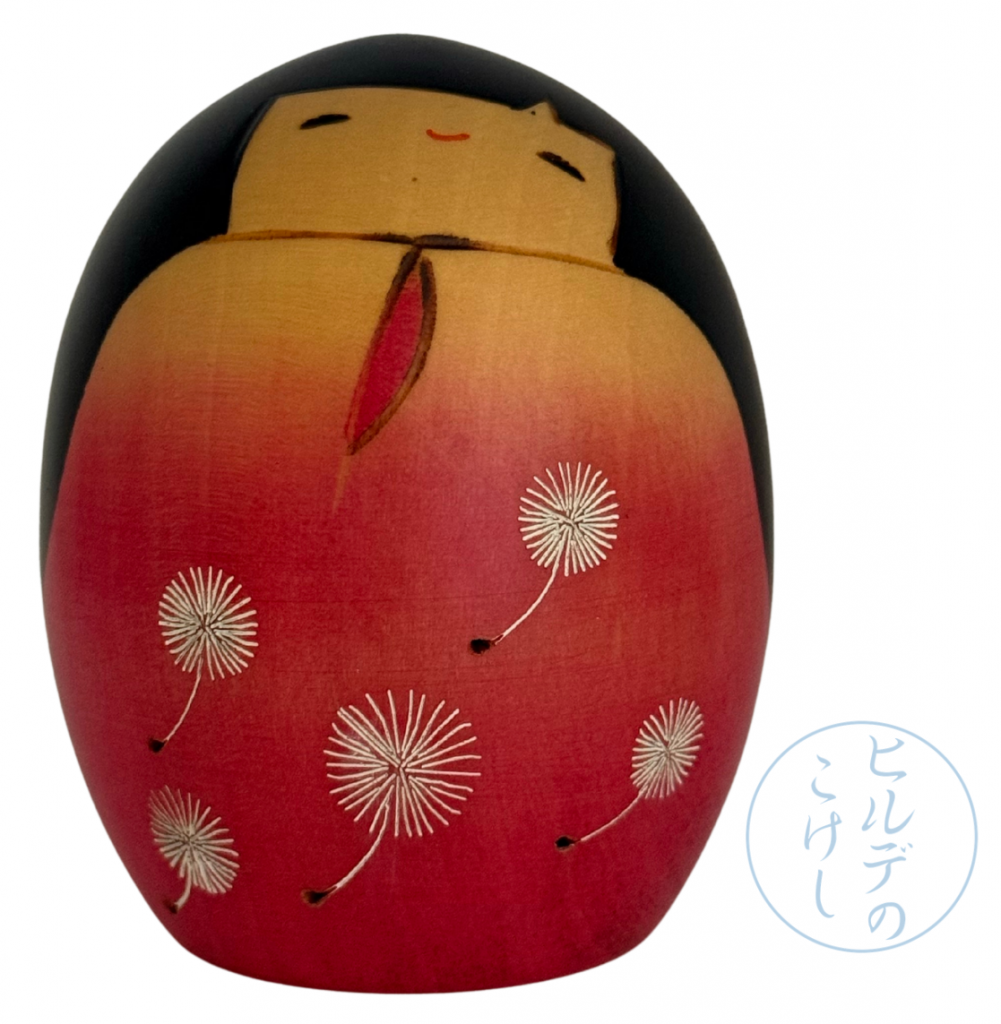
This small egg-shaped Kokeshi by Okamoto Usaburō (岡本 卯三郎) is called Tampopo (タンポポ) which means Dandelion, Latin: Taraxacum officinale. She is wearing a rich, blended rose pink kimono that fades upward toward the face. The pink dress features several white dandelion seed puffs drifting across the body. The stems of the dandelions and the collar line of the kimono are finely carved into the wood before painting to add depth. A small slice of natural wood grain peeks out at the chest, mimicking the layer of an inner kimono.
The meaning of dandelions in Japanese culture:
- Because dandelions can take root and bloom in incredibly harsh conditions—even pushing up through narrow pavement cracks and gravel paths—they are a powerful symbol of courage, resilience, and unyielding strength (indomitable spirit). Gifted to someone, it serves as an encouragement to stay strong and persevere through difficult times.
- The white puff-ball seeds drifting in the wind symbolise departure, transformation, and embarking on a new path. It captures the hope and excitement of setting off toward a new world or making a fresh start, much like seeds traveling to find new ground to grow on.
- As one of the first distinct signs of spring, the dandelion brings a feeling of warmth and purity. In Japan, blowing the seed pods is tied closely to innocent childhood memories and folk songs, imbuing the doll with a sense of playful nostalgia and simple joy.
Specifications:
Height: 7 centimetres
Weight: 100 grams
Material:
Mizuki (Giant dogwood)