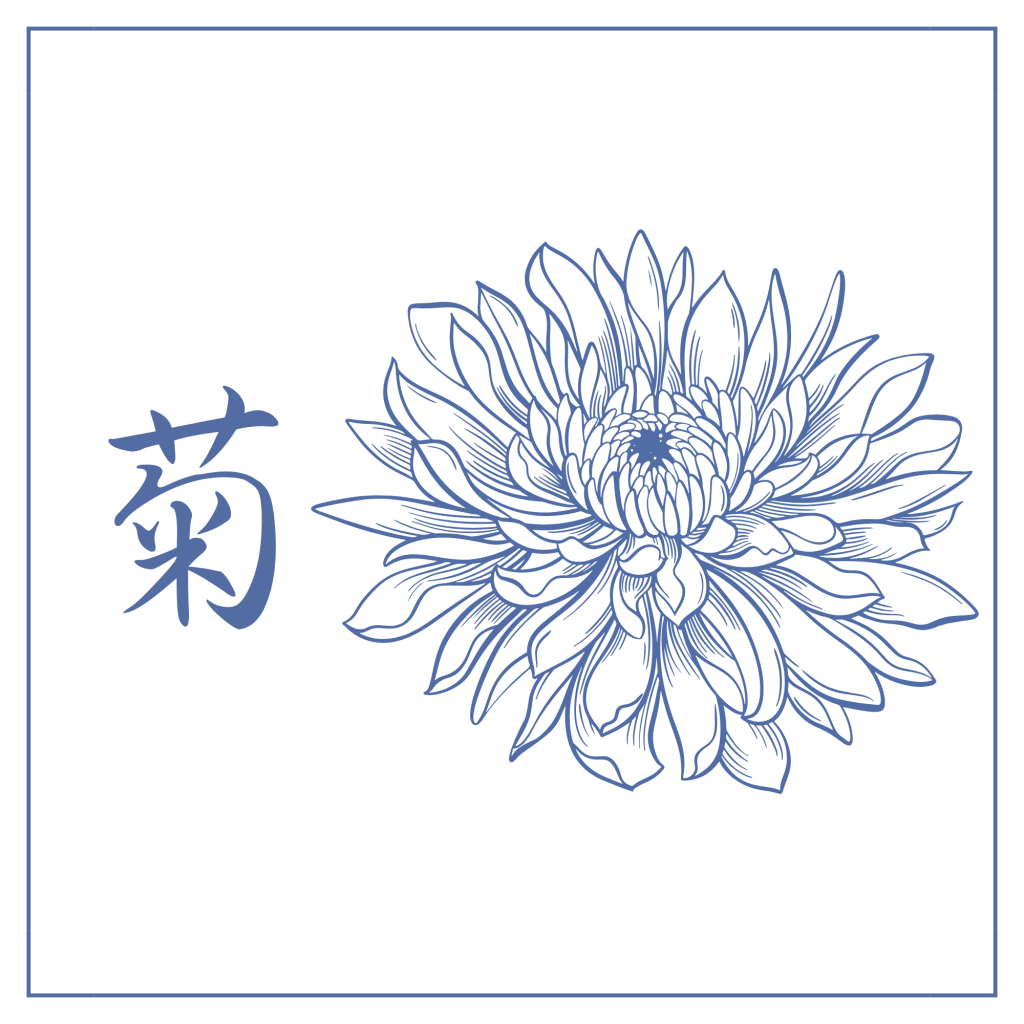
Chrysanthemums (菊), sometimes abbreviated to mums or chrysanths, are perennial herbaceous flowering plants in the family Asteraceae that bloom in the autumn. They are native to East Asia and northeastern Europe. Most species originate from East Asia, and the center of diversity is in China.
The chrysanthemum was introduced to Japan from China between the 5th and 8th century CE, and has become a revered symbol in Japan and has become the symbol of the Japanese Imperial Family.
Symbolism:
- The kiku is a highly revered autumn bloom that symbolises a long, healthy life and youthfulness.
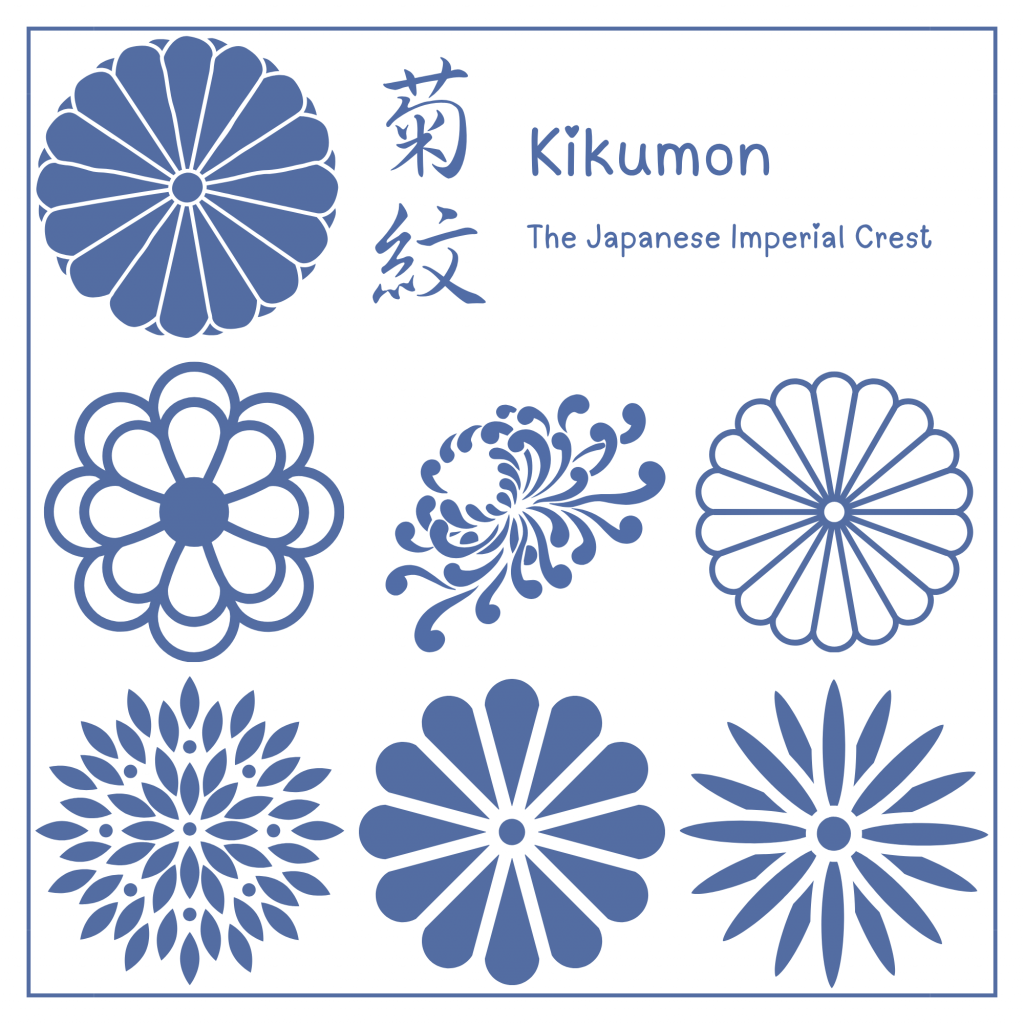
- A 16-petaled chrysanthemum serves as the official emblem of the Imperial Family and the Japanese government. The Emperor’s position is literally referred to as the Chrysanthemum Throne.
- The Imperial crest of Japan, most commonly known in English and Japanese as the chrysanthemum crest or kikumon (菊紋).
- Because of its radiating petals and ability to bloom into late autumn, the flower represents the sun, joy, good fortune, and a long, healthy life.
- The flower is associated with the virtues of Bushidō (武士道), the way of the warrior (Samurai code) embodying loyalty, honour, and grace under pressure.
The significance of the different colours of the flowers:
- Yellow: Friendship, joy, and cheerful energy.
- White: Truth, loyalty, and devotion.
(In Europe, white ones are specifically reserved for sympathy or mourning.) - Red: Love, passion, and deep romance.
- Pink: Admiration, adoration, and grace.
White chrysanthemums are a staple floral offering at Buddhist altars and are widely used in funerary ceremonies (though this differs from their association with joy and autumn in other contexts).
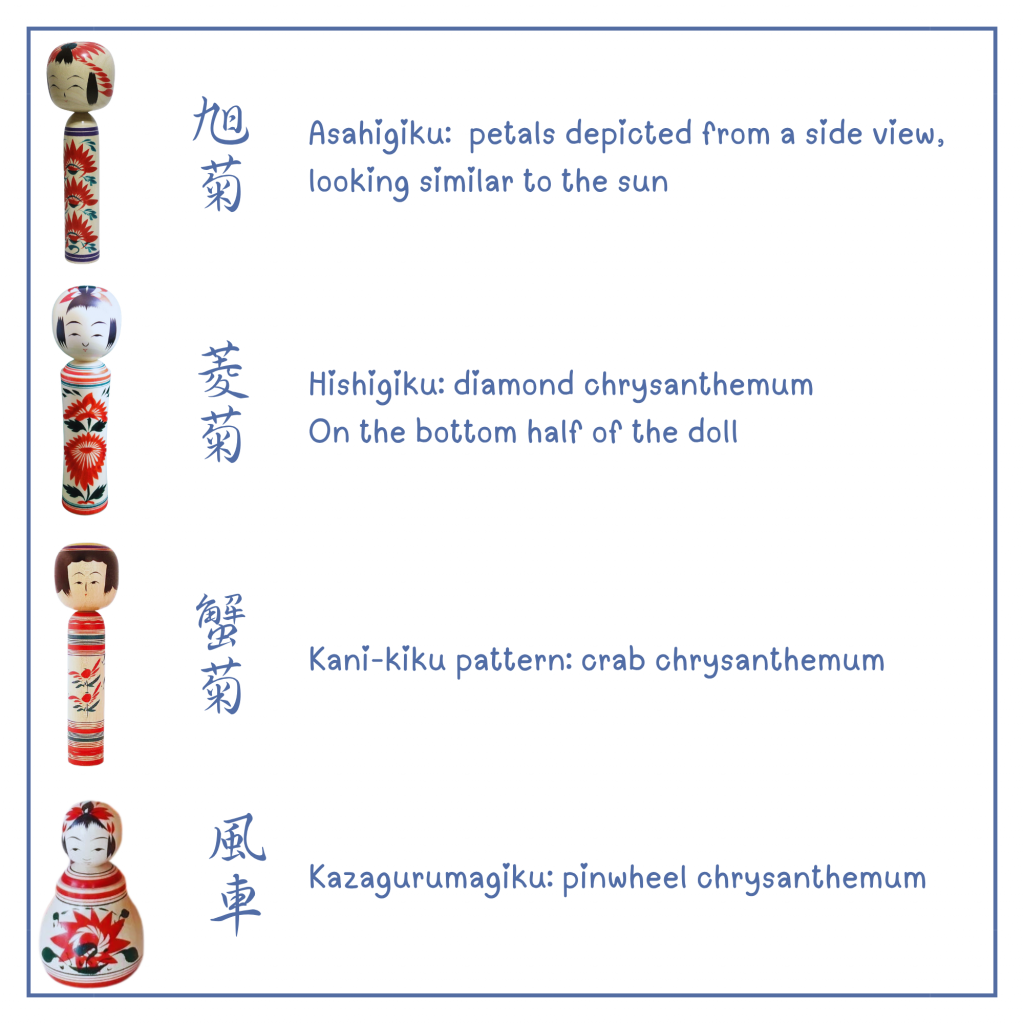
Different traditional kokeshi lineages (e.g., Naruko, Sakunami, Togatta, and Zao) feature their own signature kiku motifs:
- Kani-kiku (Crab Chrysanthemum): A famous motif in Sakunami kokeshi. The overlapping petals are drawn in a circular pattern that is stylized to subtly resemble the shape of a crab.
- Asahigiku: Chrysanthemum petals depicted from a side view, looking similar to the sun, representing goodwill and light.
- Hishigiku: Chrysanthemums arranged inside a diamond or geometric shape.
- Kazagurumagiku: Chrysanthemums drawn with a spinning or pinwheel-like flair.
- Layered Kiku: Multiple concentric circles of petals, often found on Naruko and Zap kokeshi bodies.
General Japanese chrysanthemum motifs:
Beyond wooden dolls, the chrysanthemum has been a cornerstone of Japanese floral design for centuries. It appears in classic mon (family crests), traditional textiles, and art as an emblem of autumn. Traditional patterns typically prioritise bold repetition over strict realism, celebrating the flower as a decorative icon.
Culinary use of kiku:
Edible chrysanthemum leaves, known as Shungiku (春菊: spring chrysanthemum, Latin: Glebionis coronaria) are a vital winter ingredient used fresh in salads or boiled in nabemono (鍋物: Japanese hot pots). Small edible yellow flowers are used as peppery garnishes for sashimi (刺身: thinly sliced food) to promote digestive health.
Chrysanthemum tea (known as kiku-cha or 菊茶) is a traditional, caffeine-free herbal tisane. Revered for centuries as an elixir of longevity, it is prepared by steeping dried or fresh chrysanthemum petals in hot water, resulting in a gentle, slightly sweet, and earthy floral beverage.
During the autumnal Chōyō no Sekku (held annually on September 9), the Japanese celebrate the chrysanthemum’s historic link to longevity and good health. Public parks host massive, competitive horticultural displays where flowers are crafted into massive bonsai or cascading shapes.