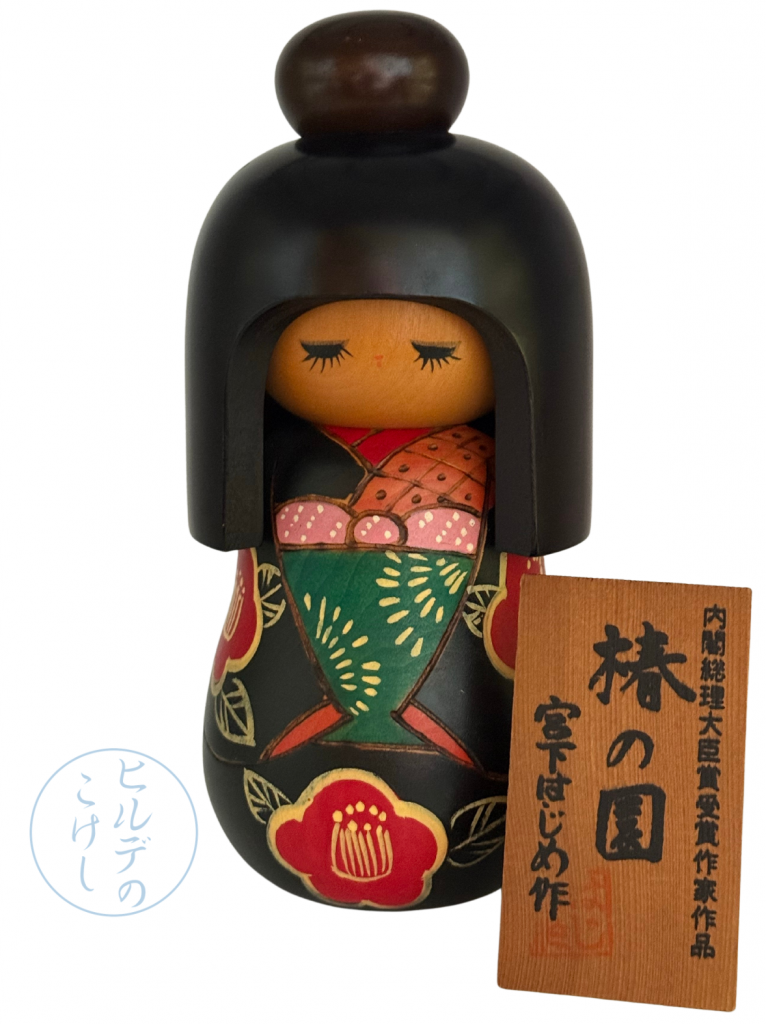
This Kokeshi by Miyashita Hajime (三山 けいじ) is called Tsubaki no sono (椿 の その) which translates to The Camellia Garden. She has a distinctive bobbed hairstyle with a top knot. Her face is natural wood (probably mizuki: 水木) and her eyes with long eyelashes are closed. She looks serene. She is wearing a black kimono decorated with vibrant red camellia (tsubaki: 椿) flowers and green leaves with a stylised green and coral geometric sash or pattern across the front.
The cultural symbolism of the tsubaki:
- The Samurai: Because camellias bloom in the bitter cold and their blossoms fall entirely from the stem rather than shedding petal by petal, they symbolised noble endurance, bravery, and a dignified death, honouring a warrior who falls in his prime rather than fading away slowly with age. For some of the warrior class of feudal Japan, however, this sudden, whole decapitation of the flower looked uncomfortably like a human head falling to the sword. Because of this visual association, some samurai considered the red camellia an unlucky omen and strictly avoided planting it within the walls of their private estates.
- Camellia seed oil (often called tsubaki oil) has been cherished in Japanese beauty routines for centuries by geisha and warriors alike to give their hair a glossy shine and to deeply cleanse the skin.
- The camellia pattern is a revered motif in Japan and is widely used in textiles for mainly kimono. You’ll find especially the red Camilla often in Japanese art, like the kokeshi dolls and pottery (eg Kutani ware).
- Sen no Rikyu (千利休), the most famous tea master of the sixteenth century, established the principles of chabana (茶花), the specific style of flower arrangement used in the tea room. Rikyu favoured simple, seasonal flowers that reflected the transient nature of life, and the winter-blooming tsubaki became the ultimate expression of this philosophy. A single, half-open camellia bud placed in an unglazed clay or bamboo vessel demonstrated the concept of wabi-sabi (侘寂), finding beauty in imperfection and impermanence. Camellia japonica is a direct cousin of Camellia sinensis, the plant harvested for green tea, made its presence in the tea room both a physical and spiritual completion of the ceremony. To place a camellia in the alcove of a tea room was to honour the very essence of the tea tradition itself.
Specifications:
Height: 18 centimetres
Weight: 320 grams