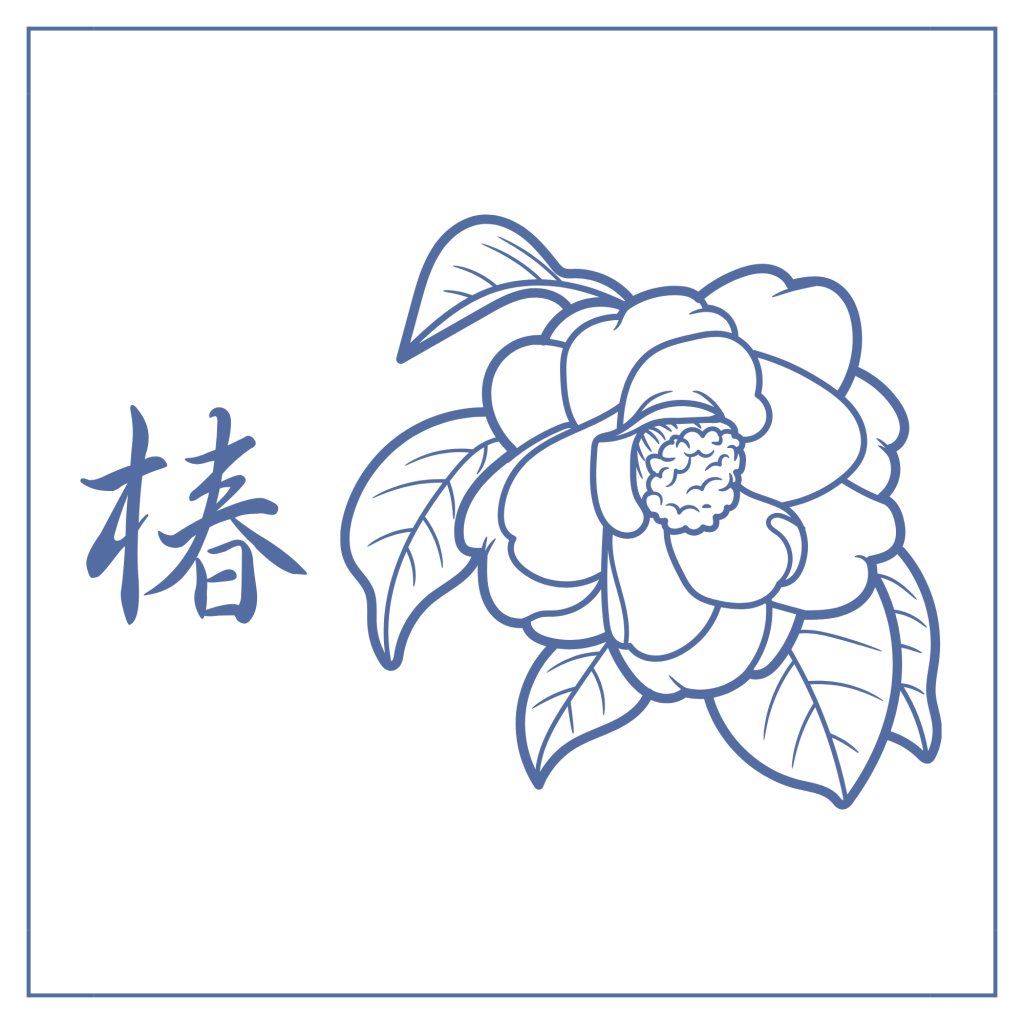
The camellia, camellia japonica, tsubaki (椿) in Japanese, is a flower species that hails from Asia. It belongs to the family of tea plants and is cultivated extensively in many regions of Japan. With its sweet nectar scent and brightly coloured petals it has become an important symbol of the country and it is a deeply meaningful flower in Japanese culture. The flower signifies love and admiration, and not in the least divine beauty. It is often associated with longevity and ever-green loyalty (this is linked to the plant’s foliage). In history, it was associated with noble deaths and/or bravery for the samurai.
The symbolism of the tsubaki
- Beauty & Resilience: Because it blooms during the cold winter months when most other plants lie dormant, it symbolises resilience and longevity
- Grace and Elegance: Known as the “spring tree” in Japan, it blooms during the chilly transition from winter to spring, representing resilience, grace, and new beginnings.
- Impermanence: Because camellias drop from the stem entirely rather than shedding petal by petal, they symbolise the beauty and sudden, complete nature of life in Japanese philosophy.
- Love & Devotion: In traditional folklore, the tsubaki represents eternal love and steadfast devotion, as its male and female parts remain inseparable even after the flower wilts.
The meaning of the different colours in the Hanakotoba (花言葉)
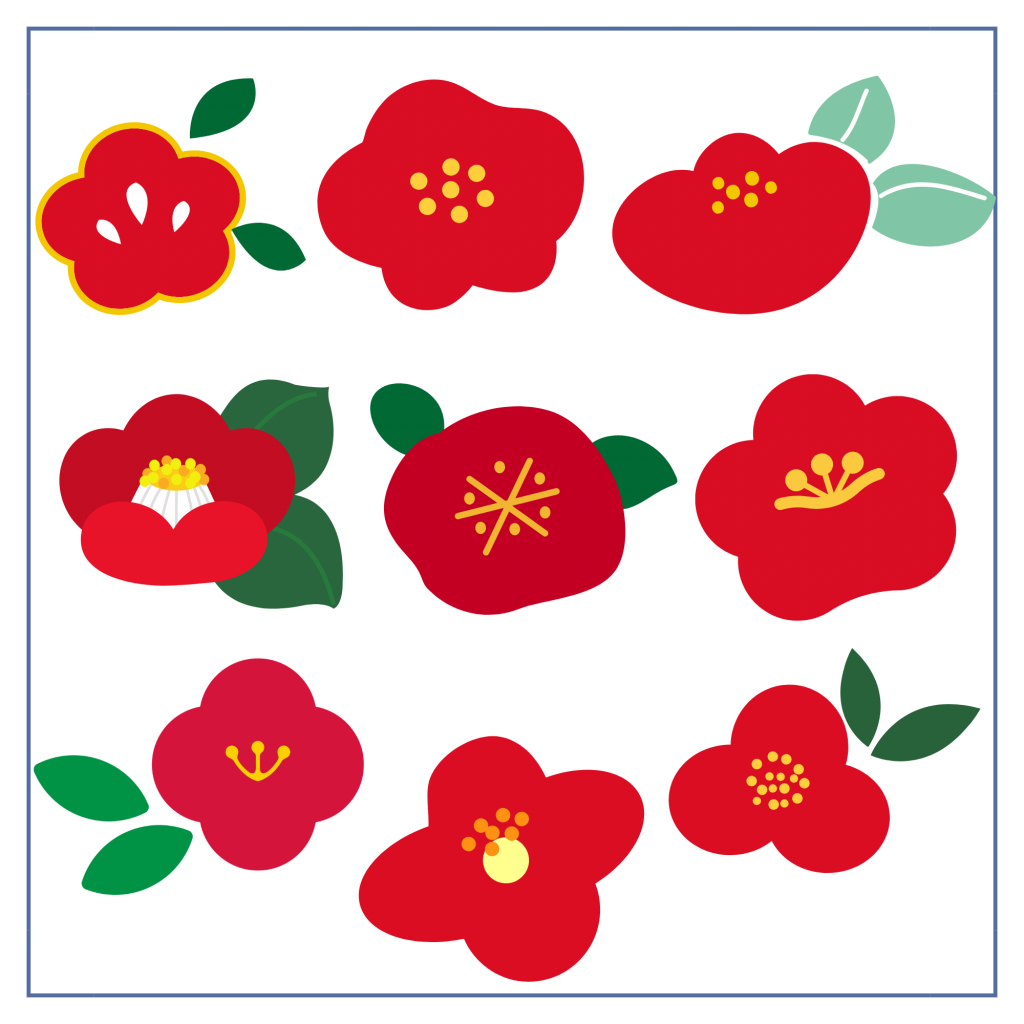
- Red: Symbolises passion, deep love, and the strength to face adversity with courage and grace.
The most prominent meaning of a red camellia is intense passion, deep love, and desire. When it frames a white heart, it physically illustrates the popular floriography phrase: “You are a flame in my heart” or “You hold the flame to my soul.” The fiery red outer layer represents the passion projecting outward, while the pure white centre represents the cherished, steady core of that devotion - White: Represents purity, innocence, and spiritual beauty.
- Pink: Conveys longing, admiration, and appreciation.
The hanakotoba is The Japanese language of the flowers
Cultural Significance
- The Samurai: Because camellias bloom in the bitter cold and their blossoms fall entirely from the stem rather than shedding petal by petal, they symbolised noble endurance, bravery, and a dignified death, honouring a warrior who falls in his prime rather than fading away slowly with age. For some of the warrior class of feudal Japan, however, this sudden, whole decapitation of the flower looked uncomfortably like a human head falling to the sword. Because of this visual association, some samurai considered the red camellia an unlucky omen and strictly avoided planting it within the walls of their private estates. This duality meant that while the chrysanthemum maintained a steady, universally positive association with the imperial family and long life, the camellia carried a heavier, more dramatic weight in Japanese culture. Different domains and clans held conflicting views on the flower, with some entirely banning it from their gardens and others breeding specific varieties to commemorate fallen comrades.
- Impermanence: The complete, sudden dropping of the flower can also symbolise the fragile, unpredictable nature of life. Because of this, they are often respectfully avoided at traditional Japanese funerals.
- Beauty and Beauty Rituals: Camellia seed oil (often called tsubaki oil) has been cherished in Japanese beauty routines for centuries by geisha and warriors alike to give their hair a glossy shine and to deeply cleanse the skin.
- The camellia pattern is a revered motif in Japan and is widely used in textiles for mainly kimono. You’ll find especially the red Camilla often in Japanese art, like the kokeshi dolls and pottery (eg Kutani ware).
- Sen no Rikyu (千利休), the most famous tea master of the sixteenth century, established the principles of chabana (茶花), the specific style of flower arrangement used in the tea room. Rikyu favoured simple, seasonal flowers that reflected the transient nature of life, and the winter-blooming tsubaki became the ultimate expression of this philosophy. A single, half-open camellia bud placed in an unglazed clay or bamboo vessel demonstrated the concept of wabi-sabi (侘寂), finding beauty in imperfection and impermanence. The white camellia became a staple of winter tea gatherings because its pure colour stood out clearly against the dark, earth-toned walls of the traditional tea house. Tea masters appreciated the flower because it bloomed when most other plants were dormant, offering a quiet reminder of life persisting through the harshest season. The botanical reality that the ornamental Camellia japonica is a direct cousin of Camellia sinensis, the plant harvested for green tea, made its presence in the tea room both a physical and spiritual completion of the ceremony. To place a camellia in the alcove of a tea room was to honour the very essence of the tea tradition itself.
Beauty and aroma therapy
Japanese Camellia oil has been a staple in traditional Geisha beauty rituals for centuries. Rich in oleic acid, omega fatty acids, and vitamins, it provides lightweight, non-greasy hydration that absorbs quickly into the skin and hair barrier. It’s commonly formulated into hair oils, cleansing oils, and body moisturizers.
Because camellia oil is odourless and super absorbent, it is perfect for diluting potent essential oils for massages, facial serums, and DIY body care.